
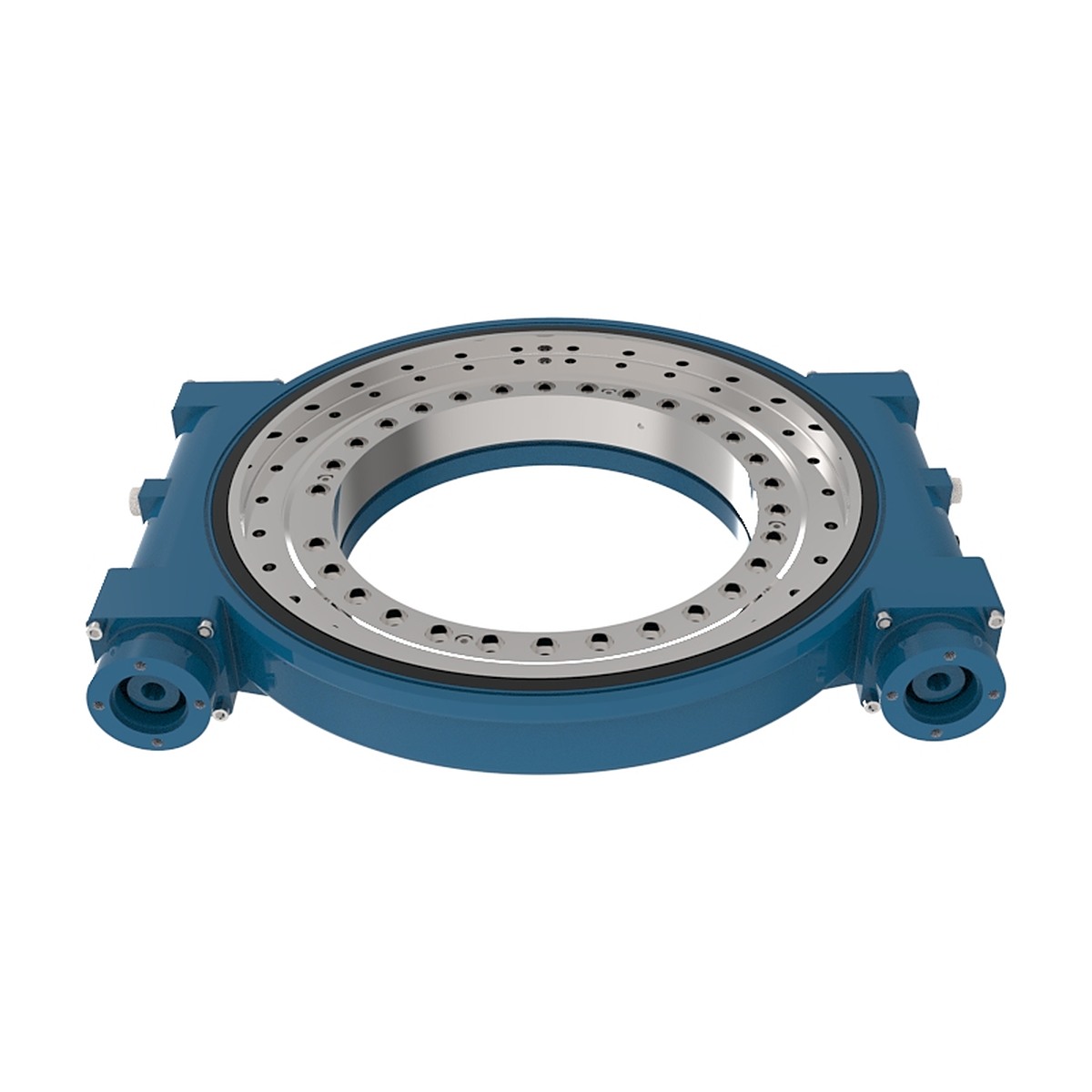
Slew drives are usually over-specified, and it is rarely the engineer’s fault — the three rating numbers on a datasheet are easy to mix up.
Output torque vs holding torque
Output torque is what the drive can turn against. Holding torque is what it can resist when stationary, and it is much higher because the worm gear is self-locking. If your load is mostly static — a tilted solar array holding position against wind — the holding figure is the one that matters, and a smaller drive will do.
Tilting moment
This is the moment trying to tip the bearing over, usually the dominant load on a solar tracker in stow position. It is limited by the bearing inside the drive, not by the gear, so it does not improve by choosing a bigger motor.
Duty cycle
A drive that moves twice a day and a drive that sweeps continuously have very different thermal lives. Tell us the moves per day and the arc of travel; it changes the recommendation more than the peak torque does.
Enclosure and environment
IP rating, temperature range and whether the site has sand or salt. These are cheap to specify correctly and expensive to fix later.
Send the load, the arc and the moves per day.
Ask for a sizing check