
Product range
Slewing bearings, slew drives and gear parts
Four product families from one engineering contact: slewing rings that carry the load, slew drives that turn it, spur gear drives for higher ratio and torque, and the gear and custom parts that go around them.
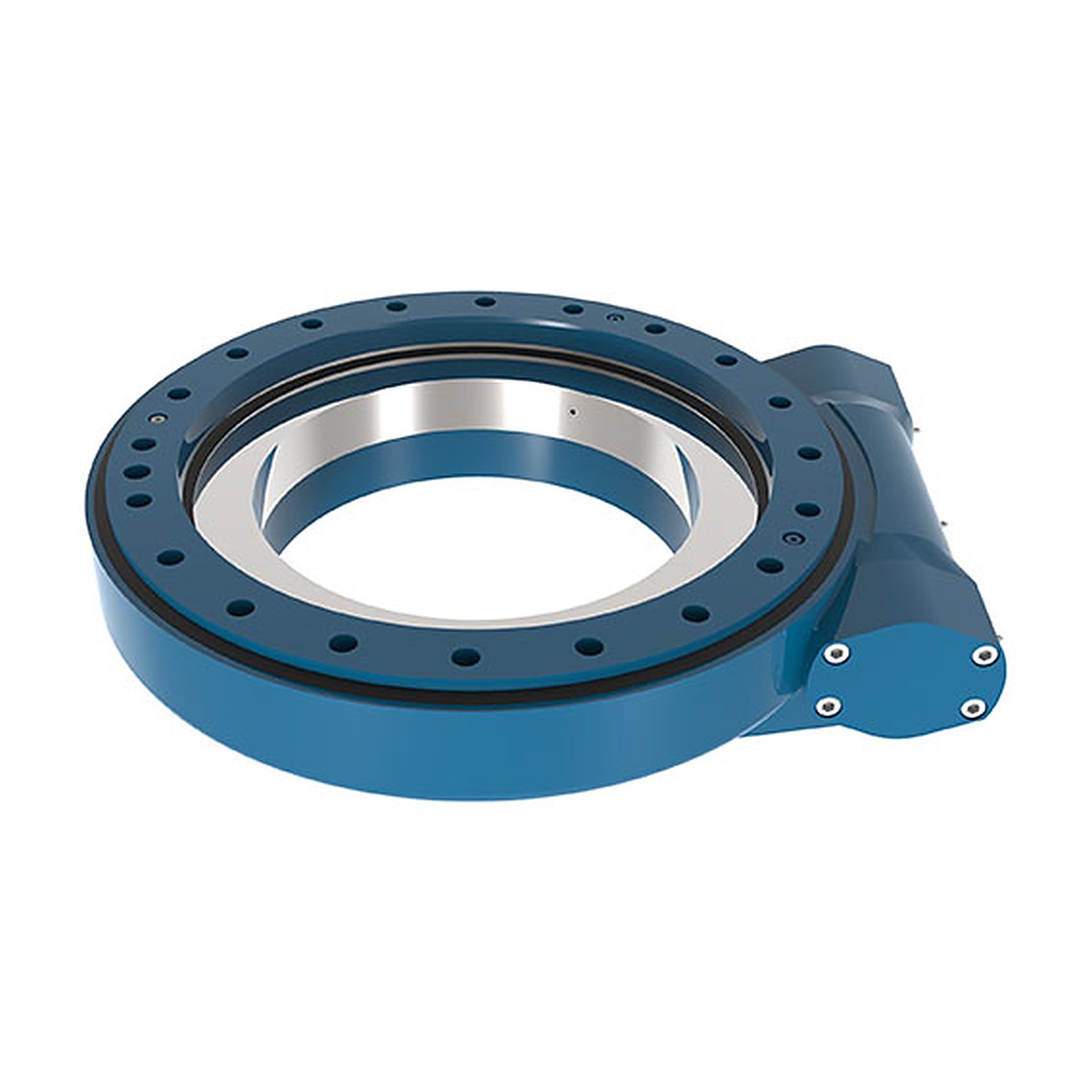
Slewing Bearings
7 structures
Four-point contact ball, crossed roller, double row and three-row roller rings, geared or plain.
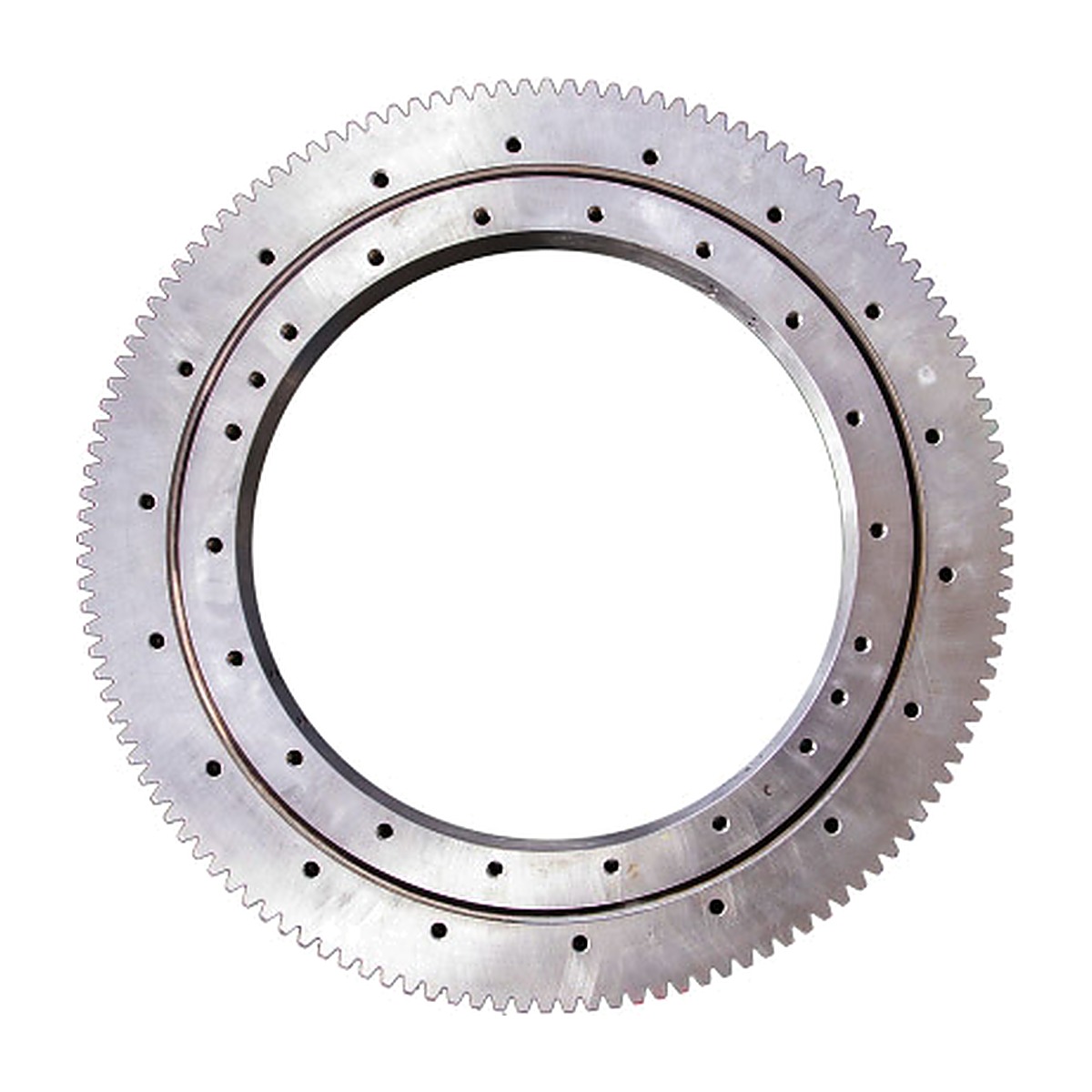
Slew Drives
6 series
Enclosed worm-gear drives in horizontal and vertical mounting, single or dual axis.
Spur Gear Drives
3 series
Spur gear reduction for higher torque and speed, with brake-compatible input.
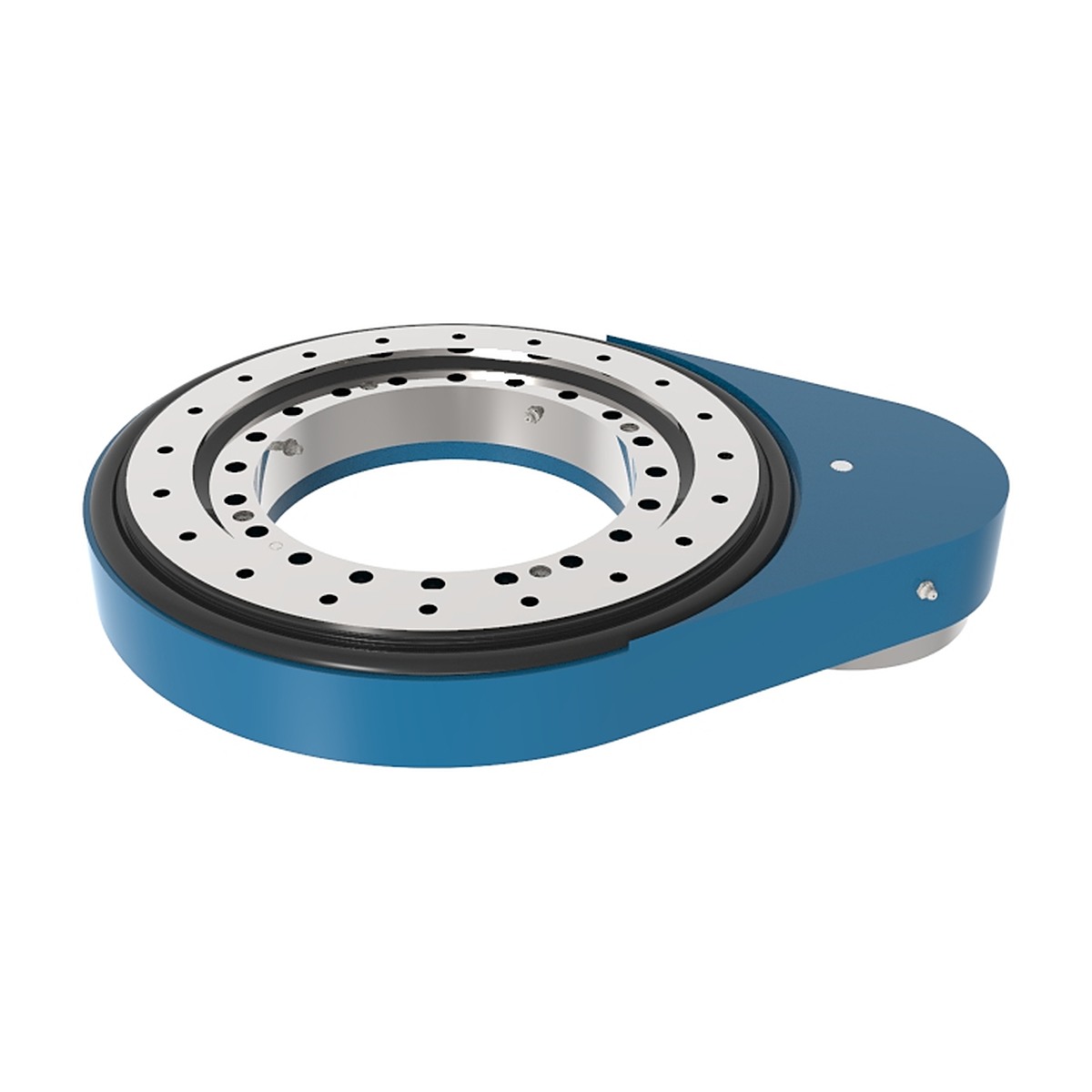
Gear & Custom Parts
to drawing
Worm gear pairs, ring gears and complete bearings machined to your drawing.
Choose by function
All three families turn a load on a large-diameter ring. What changes is where the drive sits and how much torque reaches the output — that is what decides the family.
| Slewing bearing | Slew drive | Spur gear drive | |
|---|---|---|---|
| What it is | A geared or ungeared slewing ring carrying axial, radial and tilting loads. | That same ring inside a sealed worm-gear housing, ready to rotate. | Ring plus a spur gear reduction stage for higher torque and ratio. |
| Load path | Axial load, radial load and tilting moment. | The same three, plus output drive torque. | The same three, plus the highest output torque of the range. |
| Motion | Free rotation — you supply the drive. | Self-locking worm rotation, holds position without a brake. | Non-self-locking — a brake is required. |
| Motor | Separate gearbox or pinion, your choice. | Direct flange mount: DC, AC, servo or hydraulic. | Motor with brake and encoder. |
| Typical use | OEMs building their own drive train. | Solar trackers, cranes, aerial platforms. | Heavy turntables, machine tools, positioners. |
| Select it by | Bearing envelope, gear teeth and load rating. | Output torque, holding torque and ratio. | Output torque, ratio and backlash. |
Not sure which family fits?
Send the motion, the load and the motor you plan to use. We will tell you which combination gives the stiffest, cheapest or most serviceable result.