
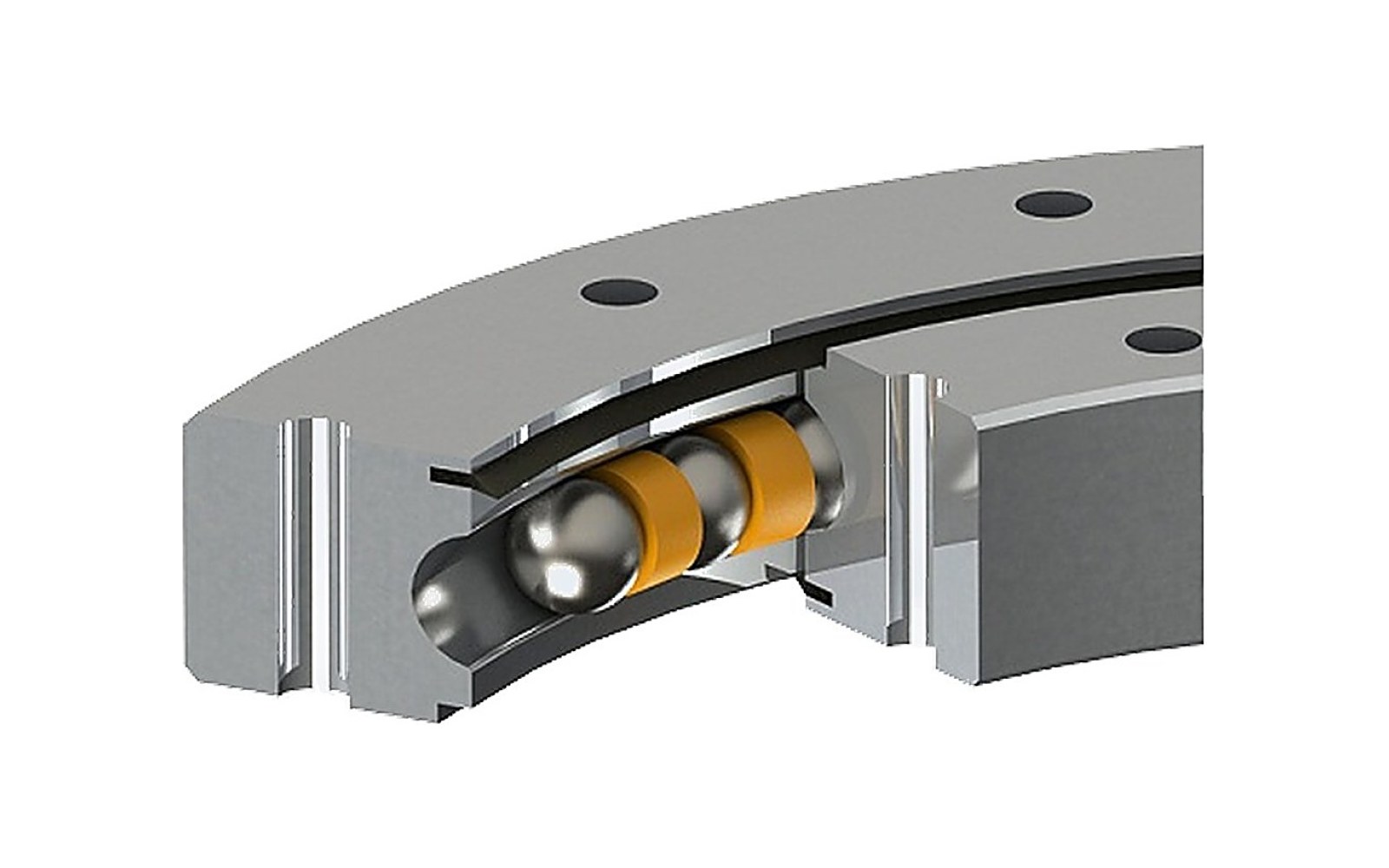
When a returned bearing shows raceway spalling, the first question is not what the steel was — it is how it was greased.
The failure pattern
Under-greasing starves the contact and produces fine pitting that grows into spalling. Over-greasing is also a problem: excess grease blows out the seal, and once the seal is gone on a dusty site the bearing is finished.
A practical interval
As a starting point, grease every 100 operating hours for normal conditions, and every 50 hours for dusty, wet or high-temperature sites. For a solar tracker that moves a few times a day, this often works out to a service visit every six months — which is what most operators do anyway.
- Rotate the bearing while greasing so the new grease is distributed.
- Wipe the nipple before coupling to avoid pushing grit in.
- Stop when fresh grease appears at the seal — not before, not much after.
What to specify
Tell us the ambient temperature range and whether the site is coastal. Lithium complex EP grease covers most cases; extremely cold sites need a different base oil.
We can send the recommended grease and interval for your model.
Ask for a lubrication sheet