
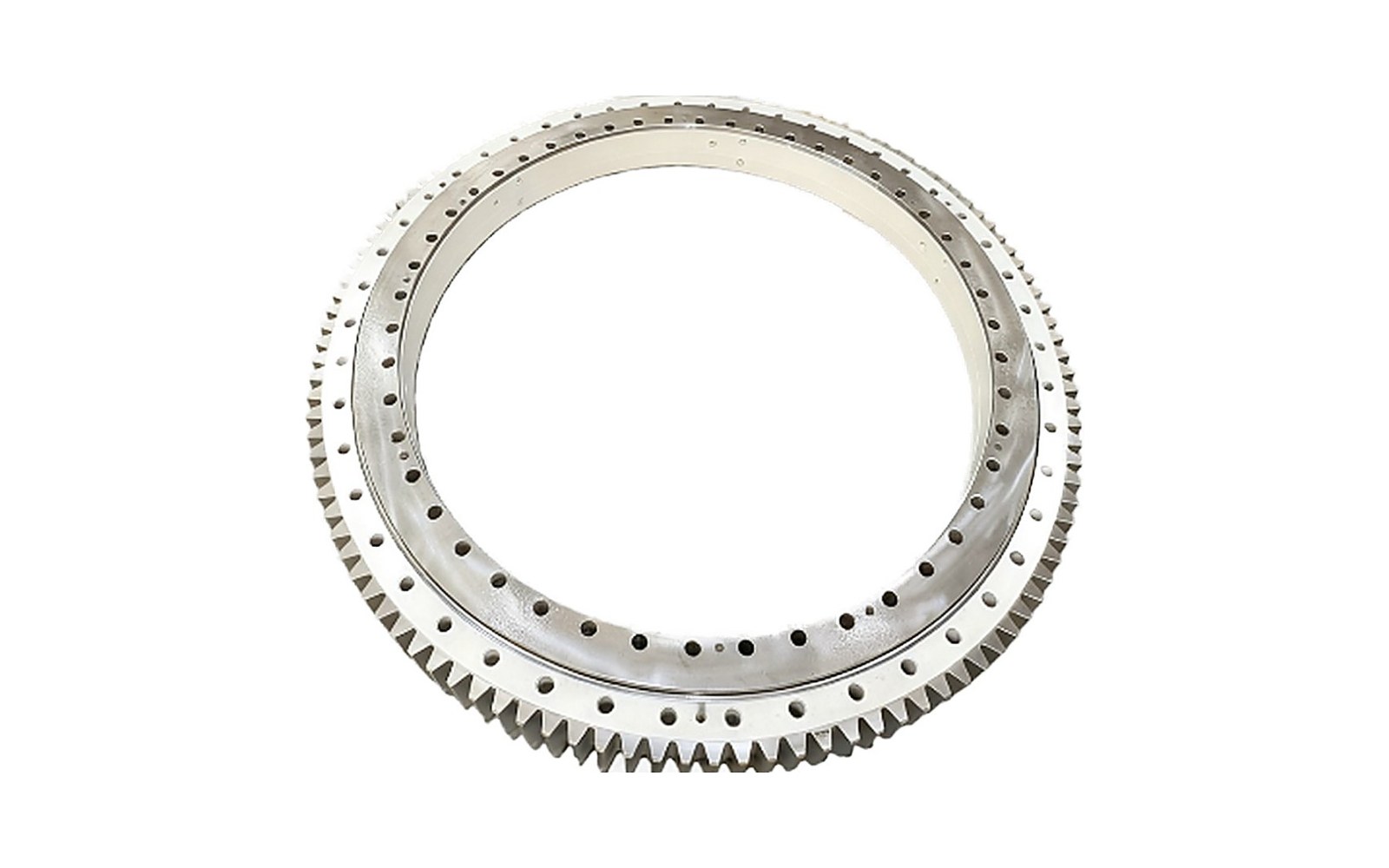
A bearing is only as round as the structure it is bolted to. Two mounting numbers account for a large share of the early failures we are asked to investigate.
Flange flatness
The mounting surface should be flat within roughly 0.1 mm over the full diameter for a machined flange, and the two surfaces — upper and lower — should be parallel. Welded structures usually need machining after welding, not before.
Bolt preload
Bolts hold the ring to the flange and carry the separating load. If they are not preloaded to the specified torque, the ring lifts cyclically, the raceway is loaded unevenly, and the bolts themselves fatigue.
- Use the torque in the drawing, applied with a calibrated wrench, in a cross pattern in two passes.
- Check bolt grade. A grade 8.8 bolt substituted for 10.9 changes the required torque.
- Re-check torque after the first week of operation, then at each service.
A quick field check
With the bearing unloaded, rotate it by hand. A ring that binds at one position is usually telling you the flange is out of flat, not that the bearing is defective.
We will mark the flatness and torque callouts on it.
Send the mounting drawing